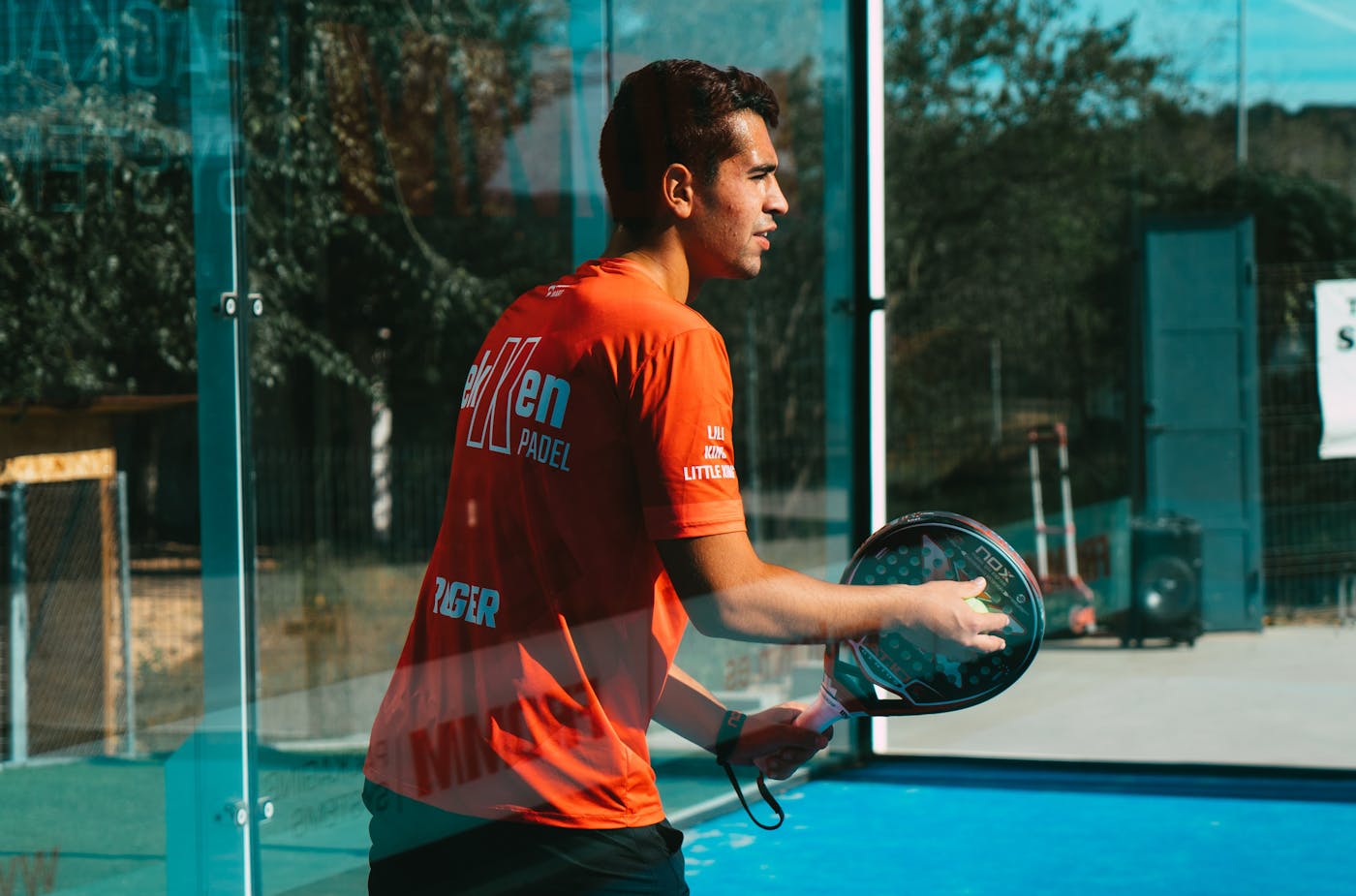
On an unfamiliar padel court, use your permitted warm-up to check three things: how the ball rebounds, where visibility changes, and how much room you have. Then choose one simple adjustment for the opening game. This guide is for recreational players preparing for a match at a new venue, or on a court they have not used before.
This is a practical observation routine, not a test of court quality or a replacement for your normal warm-up. If the organiser gives you a fixed warm-up time, stay within it and share it fairly with the other players. Our 12-minute padel warm-up offers a fuller routine when you have time.
A three-check court routine
| Notice | Try during the warm-up | Opening-game decision |
|---|---|---|
| Bounce and glass | With a partner, exchange a few controlled deep balls on each side. Watch the bounce and, when safe, let some reach the back glass. | If you are late to the rebound, give yourself more space and choose a controlled return instead of rushing an attacking shot. |
| Sightlines | Look from both ends for sun, lights or background areas that make the ball harder to see. | On a difficult high ball, call early and choose a comfortable reply rather than forcing an overhead winner. |
| Space and access | Notice the back corners, court entrances and any venue instructions before play. | Leave room to move safely; do not assume you can chase a ball outside the court. |
Try to use both ends if the warm-up allows. A single bounce can be affected by where and how the ball was struck, so use several observations before changing your plan. The LTA Padel beginner skills guide introduces playing from the back of the court and using the glass.
What should you do if the glass rebound feels unfamiliar?
Start with a manageable feed: one player sends a controlled ball deep, and the receiver watches it bounce and rebound from the back glass before returning it. Swap roles. Keep enough distance from the wall to move and never crowd a partner. For a more detailed progression, see how to use the back glass.
In the first game, choose a return you can control. If the ball does not reach the glass, adjust and play it before a second bounce rather than waiting for a rebound that will not come. A lob is a high shot over the opponents; it can give you time, but only try one when you can see and reach the ball comfortably.
What should partners agree before the first point?
Keep the conversation short: which side each player starts on, who calls a ball down the middle, and one court observation each. For example: “The lights are awkward at this end; call early on high balls.” Avoid making a fixed rule that leaves a reachable ball uncontested; communicate again as the rally unfolds. The middle-ball decision guide gives pairs a starting rule.
If wind is affecting an outdoor court, use the separate windy-conditions match plan to make more specific adjustments. If a surface or fixture seems unsafe, stop and alert the venue or organiser before continuing.
Check the rules for leaving the court
Do not chase a ball outside just because a door is open. Out-of-court play is only permitted when the applicable rules and court safety conditions allow it. The FIP Rules of Padel set out the conditions; check with the organiser when unsure. During a normal rally, the ball must be returned before its second bounce, as explained in LTA Padel’s rules guide.
After the opening game
Ask your partner which observation mattered. Keep the adjustment if it helped you make a comfortable decision; change it if the rallies gave you better information. You can use Padel Coach App to review a suitable match clip afterwards: compare your starting position with the bounce you expected, then choose one thing to practise. Ask everyone in the video for permission and follow venue rules before recording; our recording guide explains a useful camera setup.
Learn how our guides are researched, prepared and checked in our editorial policy.